Workplace Wellbeing Trends Singapore Employers Should Watch in 2026

For years, workplace wellbeing in Singapore sat in the same place it sat in most markets. It was a benefit, owned by HR, measured by how many people joined the wellness day. In 2026 that position is becoming untenable, and the reasons are specific to Singapore rather than borrowed from global trend reports.
Three forces are converging: a change in the law, a change in what regulators inspect, and a growing recognition that the programmes most organisations run do not touch the causes of the problem. For employers, and particularly those in demanding, safety-critical sectors, these are worth understanding now rather than after enforcement begins.
Mental health is becoming a legal category, not a benefit
The most consequential shift is legislative. The Workplace Fairness Act, passed in January 2025, classifies mental health conditions as a protected characteristic, with enforcement expected across 2026 and 2027. That single change moves mental health out of the discretionary, feel-good category and into the same legal territory as other forms of workplace protection.
The Act itself is anti-discrimination law. It protects employees from adverse treatment based on a mental health condition, and it gives them a route to challenge it, with grievance-handling obligations on employers and penalties for serious breaches. It does not, on its own, require organisations to assess and manage psychosocial hazards. But its arrival signals the direction unmistakably. Once mental health carries legal weight, the organisations best positioned are those that manage the conditions producing psychological harm in the first place, rather than those waiting to defend a complaint after the fact. The law addresses the consequence. Getting ahead of it means addressing the cause.

Regulators are expanding what they inspect
Alongside the legislation, the Ministry of Manpower and the Workplace Safety and Health Council have broadened their focus beyond physical hazards to include psychosocial ones. Employers are increasingly expected to address workplace stress, long working hours, and related strain as part of their formal risk assessments, not as a separate welfare exercise.
The enforcement mechanism matters here, because it has teeth that go beyond fines. Organisations with poor safety records face debarment from government tenders, which for many Singapore firms is a more serious consequence than any financial penalty. As psychosocial risk moves into the scope of what regulators assess, the same commercial stakes begin to attach to it. MOM is also applying data analytics and real-time monitoring to target high-risk workplaces for inspection, so compliance checks are becoming both more frequent and more sophisticated.
Singapore has also developed its own psychosocial screening tool. The iWorkHealth instrument, produced by MOM and the Workplace Safety and Health Institute for the local working population, lets organisations self-assess across dimensions including job demand, job control, and the quality of management and colleague support. Its existence is a signal in itself: the infrastructure for measuring psychosocial risk in Singapore workplaces is being built, which tends to precede the expectation that employers use it.
iWorkHealth is a useful starting point, and a free one. But it is a self-administered screening questionnaire, not a risk assessment. It can tell an organisation that stress or workload may be a problem. It does not tell you where the risk concentrates, how severe it is against a recognised standard, or what to do about it in a form the board and regulators will accept. That is the difference between a screening tool and a psychosocial risk assessment aligned to ISO 45003, which produces a structured risk register, a maturity score, and a prioritised action plan. The screening tells you something may be wrong. The assessment tells you what, where, and how to fix it. As regulatory expectation moves from awareness toward managed, auditable risk, the gap between those two things is where most of the compliance work will sit.
The programmes most employers run are aimed at the wrong target
The third trend is a growing acknowledgement that conventional wellbeing programmes do not work on the problem they claim to solve. Gallup's Singapore Workplace Report 2026 put it plainly: most organisations offer flexible working, employee assistance programmes and wellness initiatives, employees value them, but they address the consequences of poor wellbeing rather than the causes. Unmanageable workloads, psychosocial hazards and chronic burnout are not resolved by wellness days.
This is not a Singapore-specific insight, but it lands with particular force in a market facing accelerating disruption. AI adoption, an ageing workforce, hybrid work, and elevated operating costs are all adding pressure to how work is designed and experienced. A meditation subscription does not touch any of these. The conditions that produce burnout sit in workload, staffing, roster design, and leadership behaviour, and those are the things an effective response has to change.
For employers, the practical implication is a shift in what wellbeing investment is for. The question is moving from "what programmes do we offer" to "what conditions are we producing, and where is the risk." That reframe moves wellbeing out of the perks budget and into the risk and operations conversation, which is where the regulatory direction is pushing it anyway.
Why this matters most in high-risk industries
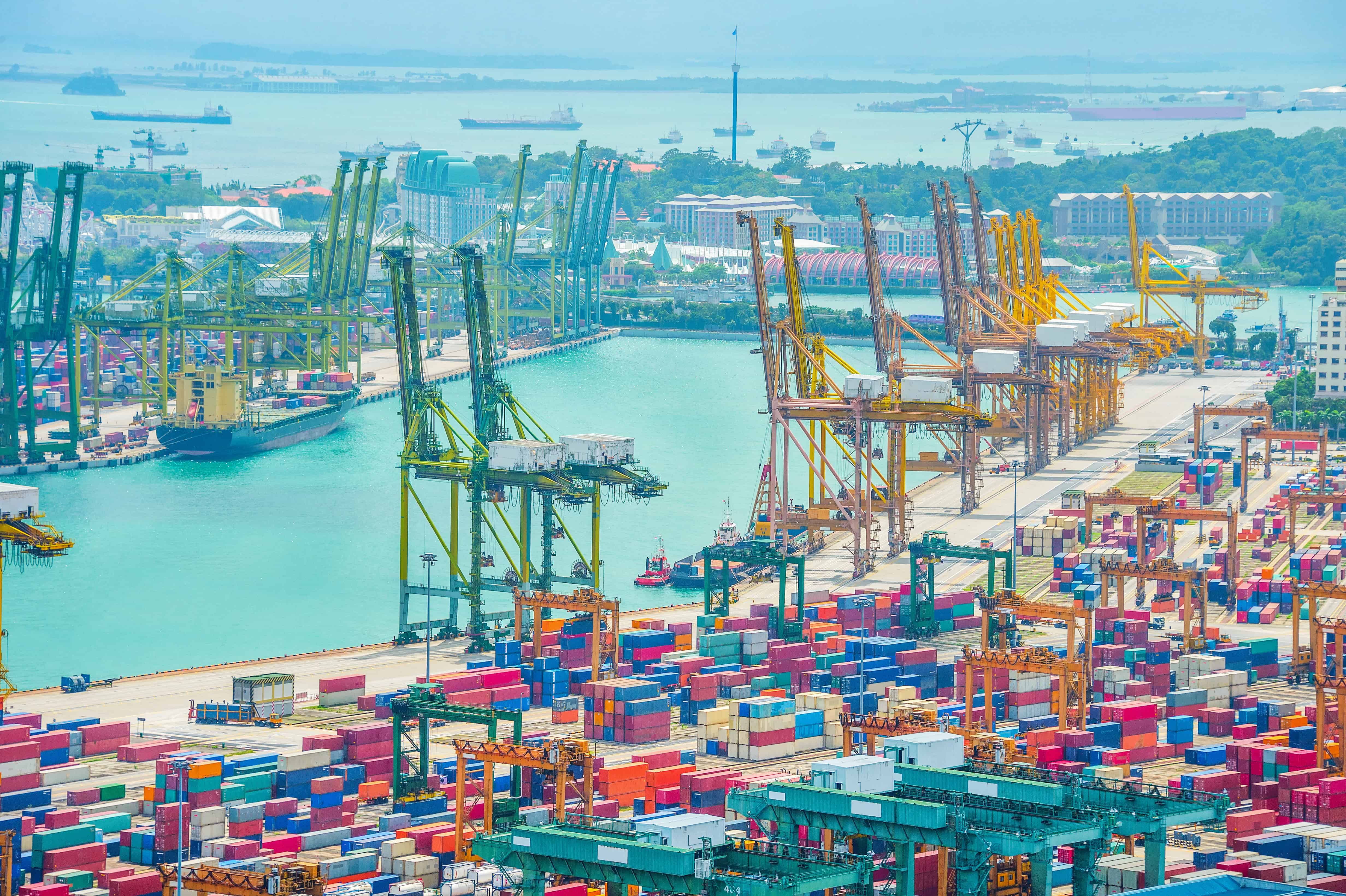
Every trend above applies to any Singapore employer. They apply most sharply to organisations in safety-critical sectors, where Singapore has a concentration of activity: maritime, given the port and the shipping industry based here, along with construction, logistics, and the regional energy and offshore sector.
In these environments the conditions that drive psychosocial risk, extended hours, fatigue, sustained operational pressure, isolation for those who work offshore or at sea, are structural rather than occasional. And the consequence of a degraded decision is not reduced productivity but a potential safety incident. The convergence of a new legal category for mental health, expanded regulatory scope, and the commercial stakes of tender debarment means these employers have the most exposure and the most to gain from getting ahead of the shift.
For a maritime operator running crews through Singapore, or a construction or logistics firm bidding for government-linked work, psychosocial risk is moving from a welfare consideration to a compliance and commercial one. The organisations that treat it as operational risk, measured and managed with the same rigour as physical safety, will be the ones ready for where 2026 and 2027 are heading.
What to do about it in 2026
The through-line across all three trends is the same. Wellbeing in Singapore is shifting from a discretionary benefit to a managed risk, driven by law, regulation, and a growing recognition that programmes aimed at symptoms do not change outcomes.
For employers, the sensible response is not another wellness initiative. It is to understand where psychosocial risk actually sits in the organisation, using a structured assessment aligned to ISO 45003, the international standard for managing psychosocial risk. That produces a picture of the conditions driving risk, framed for the board and for compliance, rather than a snapshot of engagement sentiment. From there, the work is to address the highest-risk conditions, in workload, rostering, role clarity and leadership, before they become either an incident or a complaint.
If you want to understand where your organisation stands, you can benchmark against the Six Drivers of Workplace Wellbeing using our mini self-assessment, or get in touch to discuss a psychosocial risk assessment aligned to ISO 45003. For a fuller treatment of what this work involves, see our guide to employee wellbeing consulting in Singapore.

Frequently asked questions
What is the Workplace Fairness Act and when does it take effect?
The Workplace Fairness Act, passed in January 2025, makes mental health conditions a protected characteristic in Singapore, alongside age, nationality, sex, race and disability. Enforcement is expected across 2026 and 2027. It is anti-discrimination law, giving employees a route to challenge adverse treatment and placing grievance-handling obligations on employers, rather than a law that directly mandates psychosocial risk assessment. But it signals a clear shift toward treating mental health as a legal responsibility.
Are Singapore employers now required to assess psychosocial risk?
Not explicitly under a single law yet, but the direction is clear. The Ministry of Manpower and the Workplace Safety and Health Council have expanded their focus to include psychosocial hazards such as workplace stress and long working hours as part of risk assessment. Singapore has also developed the free iWorkHealth screening tool for workplace psychosocial risk, though a screening questionnaire is a starting point rather than a substitute for a structured risk assessment aligned to ISO 45003. Regulatory expectation tends to follow the availability of such tooling.
What are the consequences of ignoring psychosocial risk in Singapore?
Beyond the employee-relations and productivity costs of burnout and turnover, organisations with poor safety records face debarment from government tenders, which for many Singapore firms is more damaging than financial penalties. As psychosocial risk enters the scope of regulatory inspection, similar commercial stakes attach to managing it.
Why aren't wellness programmes enough?
Because they treat symptoms, not causes. Gallup's Singapore Workplace Report 2026 found that flexible working, employee assistance programmes and wellness initiatives, while valued by employees, address the consequences of poor wellbeing rather than the workload, psychosocial hazards and burnout that produce it. Changing outcomes requires changing the conditions of the work, not adding another programme beside it.
Which sectors are most affected?
Safety-critical and operationally demanding sectors, including maritime, construction, logistics, and energy, all of which have a significant presence in Singapore. In these environments the conditions that drive psychosocial risk are structural, the consequences of degraded performance are severe, and the commercial stakes of tender debarment are high.