Why Safety Training Fails Without a Wellbeing Foundation

High-risk industries spend heavily on safety training. Compliance rates look strong. Certificates get signed off. Toolbox talks run on schedule. And workers who completed every required course still get hurt.
The problem is rarely the training. It is the condition of the person receiving it. When a worker is fatigued, mentally depleted, or under sustained psychological load, the capacity to apply what they learned collapses. Training tells you what someone knows. It tells you nothing about whether they are in a state to act on it. That gap is where a well-built safety programme quietly fails.
The disconnect between training and the worker
Traditional safety training rests on one assumption: if workers know what to do, they will do it. That holds for simple, low-pressure tasks. In high-risk work it breaks down fast.
Most programmes are designed around compliance - procedures, rules, knowledge transfer. What they rarely address is the human capacity needed to apply that knowledge under pressure. A worker who understands lockout/tagout perfectly but is running on four hours' sleep does not have the decision-making ability the procedure assumes. The knowledge is intact. The capacity to execute it is not.
Fatigue, chronic stress, and psychological load reduce a person's ability to follow procedures, spot hazards, and respond to the unexpected. These are not personal failings. They are predictable outcomes of working conditions that many high-risk industries still treat as normal. Training cannot repair what the conditions have degraded.
Read about fatigue management challenges to understand why fatigue is a systemic issue, not a training problem.
What happens when workers are trained but not well
Picture a site where training completion sits at 98%. Every assessment passed. Procedures clearly documented. And still, a serious near-miss during a routine task. What went wrong?
Under stress and fatigue, the brain's executive function weakens - the part responsible for planning, hazard recognition, and impulse control. Moderate sleep deprivation produces cognitive impairment on a par with legal intoxication. A worker in that state cannot perform to the standard the training assumed, however well they scored on the day.
Real incidents follow this pattern. A trained operator misses a critical check. A qualified engineer walks past an obvious warning sign. A licensed driver misjudges a gap. The investigation finds no training gap. It finds a wellbeing deficit. The worker knew what to do. They were not in a condition to do it.
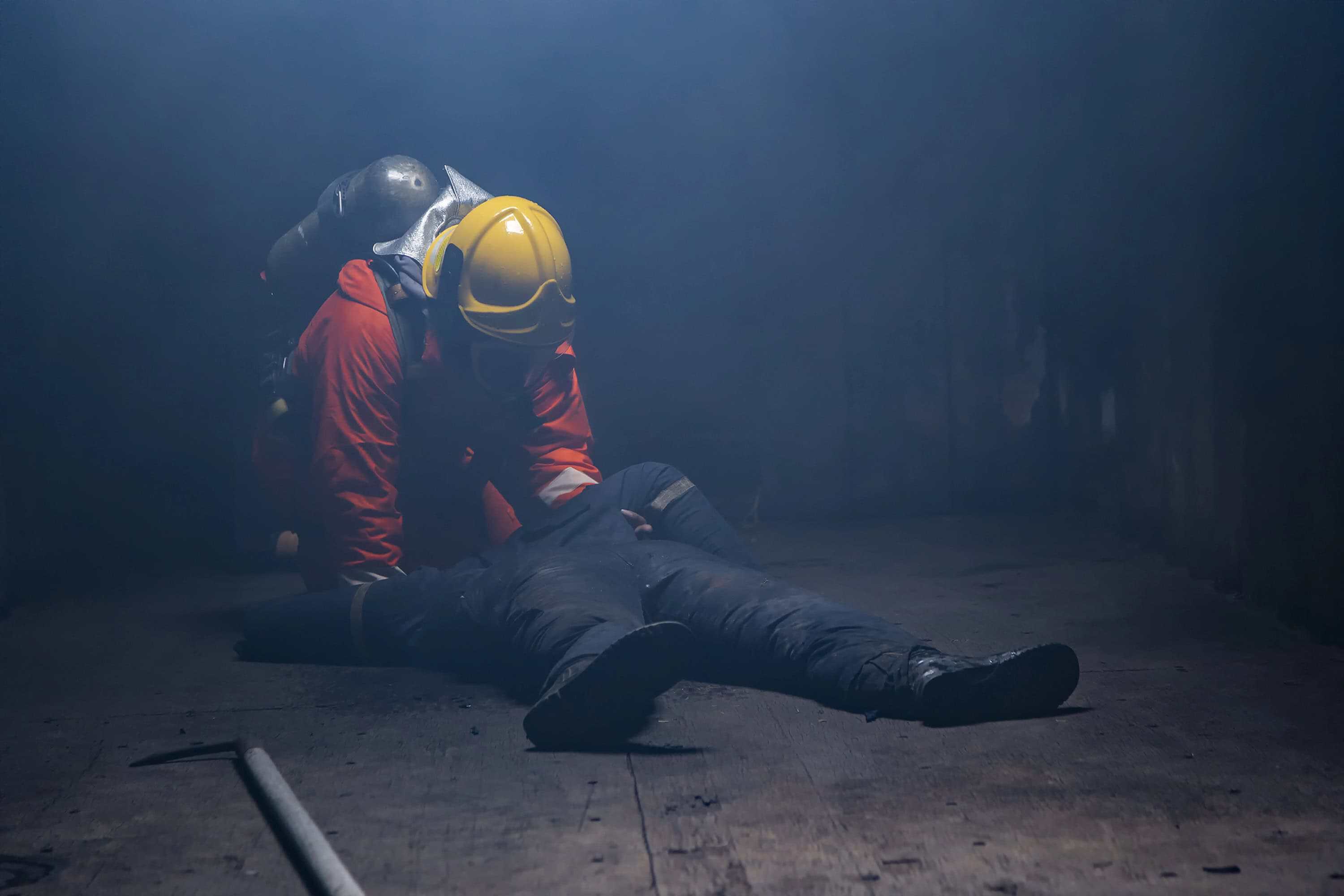
Psychosocial hazards (fatigue, stress, burnout) now sit among the leading contributors to serious injury in safety-critical sectors. A high training-completion rate says nothing about any of them. It is not a reliable measure of how safe a workforce actually is.
The science behind wellbeing and safety performance
The link between wellbeing and safety is not anecdotal. It is well supported across human factors, occupational psychology, and neuroscience.
Psychological safety, the belief that you can raise a concern or admit a mistake without punishment, is one of the strongest predictors of safe behaviour. Teams with high psychological safety report fewer serious incidents. Not because they are better trained, but because they catch and correct errors earlier, before those errors reach the sharp end.
Mental health shapes safety decisions directly. Workers carrying anxiety, depression, or burnout show reduced situational awareness, slower reactions, and a stronger pull toward shortcuts under time pressure. These are not soft concerns. They are measurable cognitive deficits, and they show up exactly where the stakes are highest.
Human factors research is consistent on the root cause. Most workplace incidents are not caused by missing knowledge or bad procedures. They are caused by the conditions people are asked to work in - workload, time pressure, interpersonal conflict, psychological distress. Addressing those conditions is not adjacent to safety. It is the foundation of it.
Explore how psychological hazards compare across industries to understand the scope of the challenge.
Why high-risk industries need this most
The industries that spend most on safety training are often the ones where wellbeing deficits run deepest. Long shifts, remote locations, physical demand, high-consequence decisions - these create a constant risk of psychological and physical depletion. Training delivered into those conditions achieves far less than it promises on paper.
Integrating wellbeing into safety is not bolting a wellness perk onto an existing programme. It means redesigning how safety performance is built and held, starting with an honest read of the conditions workers are actually in. The pattern looks different in each sector.
Maritime: when fatigue overrides training
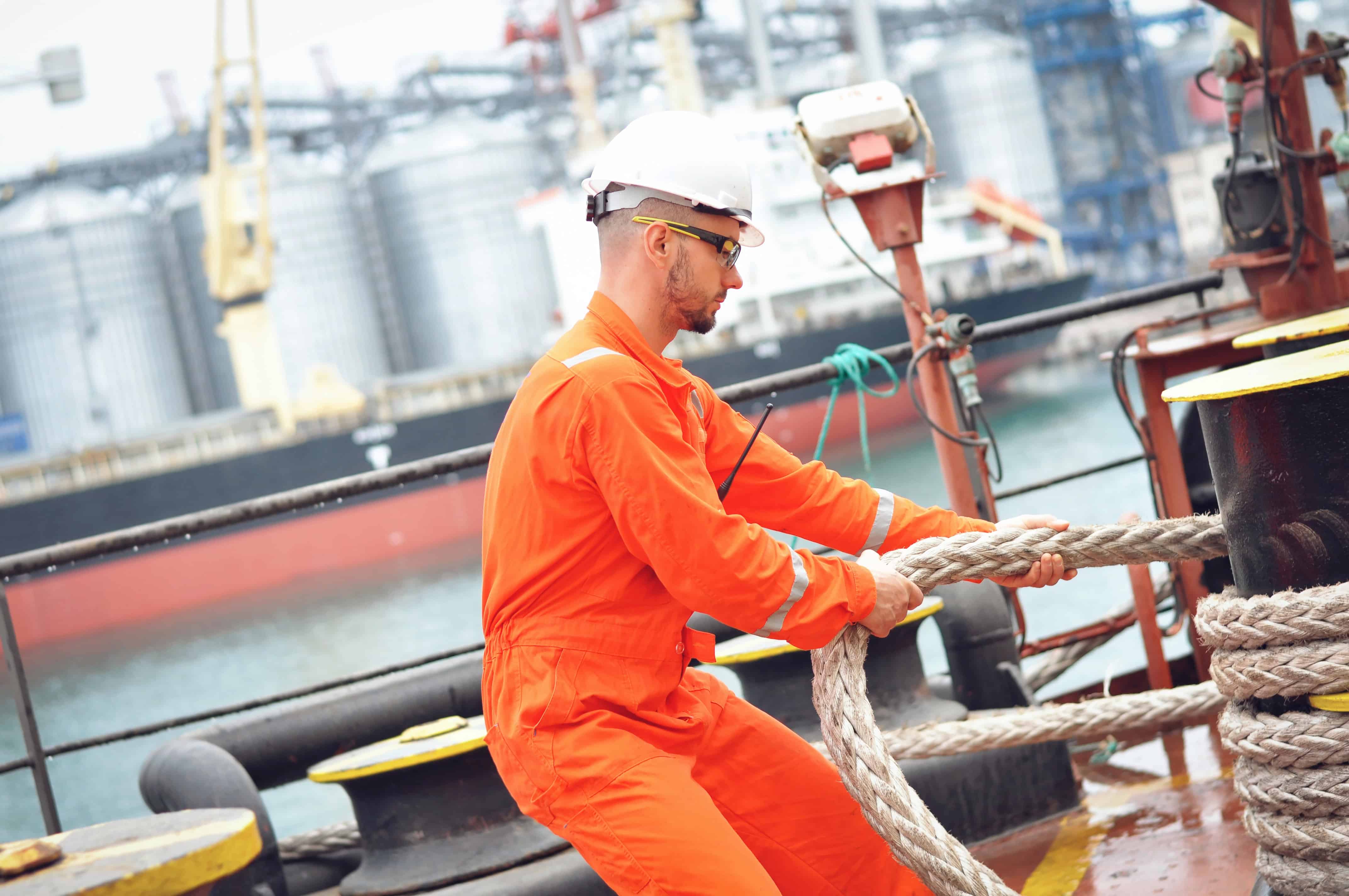
At sea the consequences arrive fast and hard. Seafarers work extended hours with minimal recovery between watches, isolated from family and support for months. Hours-of-rest limits get stretched to the edge, and self-reported fatigue stays unreliable because the culture rewards looking capable.
Maritime investigations name fatigue and psychological stress as contributors again and again, even where procedural compliance was fully documented. A seafarer who holds every certification but has not slept properly in three days is not the person who passed those assessments. The training is intact. The capacity to execute it is gone.
Learn how maritime wellbeing programs support seafarer mental health and reduce operational risk.
Mining and FIFO: isolation and safety risk
Fly-in fly-out workers carry a distinct set of pressures that follow them onto the site. Extended roster cycles, separation from family, thin social connection, and poor sleep environments combine into chronic psychological stress. That stress does not pause at the shift gate. It runs the whole rotation.
The burden is well documented. FIFO workers report markedly higher rates of anxiety, depression, and relationship strain than comparable non-FIFO workers. Those factors cut concentration, raise risk-taking, and make safe procedures harder to follow even when the worker knows them cold.
Read practical FIFO mental health strategies that mining organisations can put in place to reduce safety risk.
Oil and gas: the hidden risk under a certified operation
Oil and gas has invested heavily in process safety and technical training. The psychological health of its workforce is a different story. Upstream operations bring high-pressure environments, job insecurity, shift-work disruption, and limited access to mental health support. The result is real distress carried beneath the surface of a well-trained, well-certified operation.
That distress is linked directly to more errors, weaker adherence to procedure, and higher near-miss rates. When a worker is struggling, the sustained attention and careful judgement that safe operations demand are genuinely compromised — and no certificate on file changes that.
Understand the hidden workforce mental health crisis in oil and gas and what HR leaders need to act on in 2026.
Building a wellbeing foundation that makes training work
Creating conditions where safety training actually holds requires a strategic shift. Wellbeing cannot sit as an afterthought on top of a safety system. It has to be built into how training is designed, delivered, and sustained.
Start with a baseline. Before designing or refreshing a programme, understand the real psychological and physical state of the workforce — workload, sleep, stress, social support, access to help. Skip this and you are designing for an idealised worker who does not exist on site.
Then build the schedule around it. Delivering complex safety training at the end of a long rotation, during peak operational pressure, or straight after a major incident is counterproductive. Cognitive load matters. Timing and pacing should reflect when workers can actually absorb and retain what you are teaching.
None of it holds without visible leadership. When supervisors model the behaviours they expect and back the workers who raise a concern, safety culture strengthens. People follow procedures when they feel supported, not surveilled.
ISO 45003 gives organisations a practical framework for psychological health and safety. Explore ISO 45003 compliance as a structured foundation for integrating wellbeing into your safety system.
Measuring the difference
Most organisations track safety with Total Recordable Incident Rate and training-completion percentages. Neither tells you whether the training is working. One tells you how often people got hurt. The other tells you how many ticked a box.
TRIR is a lagging indicator. By the time it moves, something has already gone wrong. Completion rates say nothing about retention, behaviour change, or the conditions people are working in. Lean on these two alone and you get a false sense of security, blind to the early signals that wellbeing is eroding safety capacity.
The leading indicators that connect the two are different in kind: near-miss reporting rates, the quality of hazard observations, fatigue scores, psychological distress screening, and absenteeism patterns. These let you see the conditions that precede an incident, rather than counting incidents after the fact. It is the same principle behind the Six Drivers - read the conditions where risk develops before it reaches the incident data.
Understand why TRIR is the wrong safety metric, and see how to measure wellbeing ROI in ways that demonstrate real business impact to leadership.

Five practical steps
This is not a single project. It is an ongoing process that needs commitment at every level. Five places to start.
Start with a wellbeing assessment. Include psychological health, fatigue risk, and social support in your training needs analysis, and use the results to shape both the content and the timing of delivery.
Redesign the training calendar. Schedule safety-critical training in roster periods when cognitive capacity is highest. Keep high-stakes content away from the end of long rotations and periods of elevated pressure.
Create peer support structures. Workers apply safety knowledge more reliably when the team has their back. Peer support, mental health first aid, and accessible resources cut the psychological load that undermines safe behaviour.
Train supervisors to read the signals. Supervisors sit on the front line of both wellbeing and safety. Equip them to spot early fatigue, stress, and disengagement and you gain a warning system no compliance report can match.
Use wellbeing indicators as leading safety metrics. Track fatigue levels, distress scores, and near-miss rates alongside completion. That gives you a far clearer picture of real safety performance.
Find out how Wellbeing Daily helps organisations build integrated wellbeing and safety programmes that produce measurable results.
What organisations get wrong
The most common mistake is treating training as the solution rather than the tool. Training is a tool. It transfers knowledge, builds skills, reinforces procedure. What it cannot do is repair the human capacity that poor wellbeing has degraded.
So organisations respond to incidents by adding more of it. An incident touched a procedure, so they refresh that module. A near-miss exposed a gap, so they book another course. Every safety problem gets treated as a training problem, when the root cause is often something else entirely.
Refresher training delivered to an exhausted, stressed, depleted workforce achieves very little. Workers pass the assessment. They may even feel briefly sharper. The conditions that compromised their behaviour in the first place stay exactly where they were.
The compliance trap is the other failure mode - meeting the regulatory requirement instead of changing behaviour. Strong compliance numbers create a security that real performance does not back up. When the numbers look good and incidents keep coming, compliance and behaviour have come apart.
Wellbeing Daily sees this pattern repeatedly. Read why good wellbeing programs can still fail and what has to change to get real results.
Frequently Asked Questions
How does poor wellbeing affect safety training effectiveness?
It reduces cognitive capacity, attention, and decision quality. A fatigued or distressed worker struggles to apply what they learned even when they remember it perfectly. Knowledge only becomes safe behaviour when the person is in a condition to act on it.
What are the signs that training is failing because of wellbeing?
High near-miss rates despite strong compliance, shortcuts under time pressure, rising absenteeism, low engagement in sessions, and a culture where people hesitate to raise concerns. Each points to wellbeing deficits overriding training outcomes.
Can wellbeing programmes replace safety training?
No. They do different jobs and both are necessary. Training provides the knowledge and skills. Wellbeing creates the conditions in which those skills get reliably applied. Neither works well without the other.
How long until we see improved safety outcomes?
Some leading indicators (near-miss reporting, engagement scores) can shift within three to six months. Deeper change in safety performance usually takes twelve to eighteen months of consistent effort. Embedding wellbeing into the safety system, rather than running it alongside, produces the most durable results.
How do we convince leadership to invest?
Connect it to what leadership already cares about: incident cost, insurance, retention, productivity, regulatory risk. Frame wellbeing not as a welfare line but as a performance system protecting the organisation's biggest operational risk — human error under compromised conditions. Use your own near-miss and investigation data to show where those deficits have already cost you.
Safety training effectiveness in high-risk industries depends on the wellbeing of the people receiving it. Without that foundation, even the most rigorous programme fails to produce the consistent, reliable behaviour these environments demand. Integrating wellbeing into safety is not a nice-to-have. It is the piece that decides whether training becomes performance or just fills a compliance requirement. Wellbeing that works when it matters most.