FIFO Workforce Mental Health Strategies That Reduce Fatigue And Burnout

Introduction
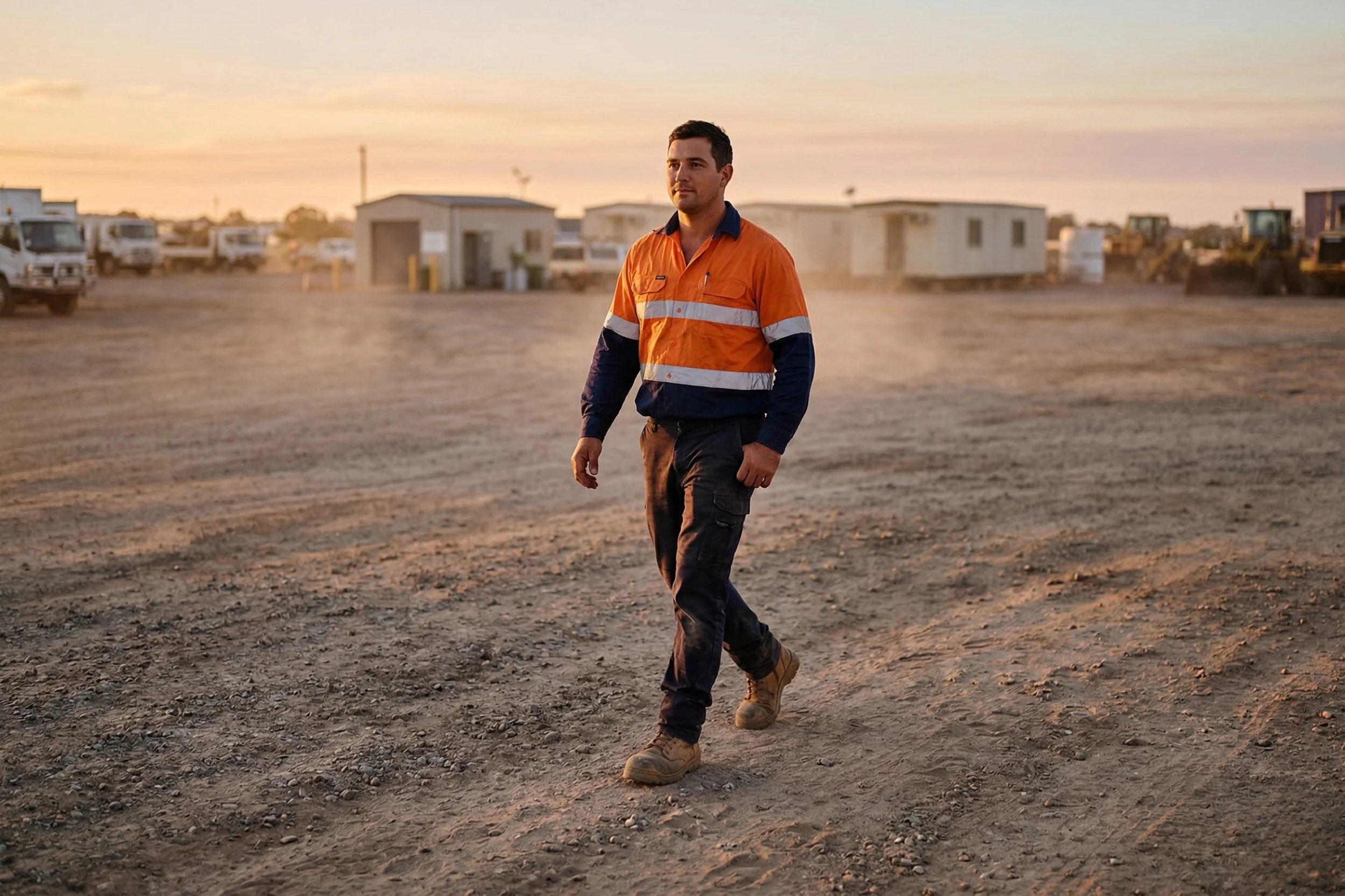
A Fly-In, Fly-Out (FIFO) worker on day eighteen of a 21-day swing is not the same operator who landed on day one. Reaction times slow. Risk perception narrows. Decisions that were sound in week one quietly become marginal in week three. This is not weakness. It is the predictable result of how the work has been designed.
Yet most organisations treat FIFO workforce mental health as a personal habits problem. They run a wellbeing month, send a hydration reminder, and put an EAP number on the noticeboard. The fatigue, the burnout, the slow erosion of judgement: those carry on as before, because the conditions producing them have not changed.
This article looks at what actually drives FIFO mental health risk and what shifts when organisations stop trying to fix the worker and start redesigning the system.
A Note on Language: Wellness or Wellbeing
The two words are not interchangeable. Most FIFO employee wellness programs place responsibility for health on the worker: their sleep, their hydration, their resilience. A workforce wellbeing strategy works at the system level, addressing the roster patterns, leadership behaviours, and environmental conditions that either support or deplete the worker's capacity to perform safely. Wellness asks the worker to cope with the conditions. Wellbeing redesigns the conditions so coping is unnecessary. The rest of this article is about the second.
Why FIFO Mental Health Sits in the Operational Risk Register
FIFO is a roster pattern. Workers fly to remote sites for two, three, or four-week swings, then return home for a shorter break. The model exists because mining, oil & gas, and major construction sites cannot be staffed locally.
Three structural features of FIFO work create predictable psychological hazards: extended hours under sustained pressure, sleep disruption from shift patterns and remote camp conditions, and prolonged separation from family and community. Together, these meet the ISO 45003:2021 definition of psychosocial hazards that organisations have a duty to manage.
The consequence is not soft. Safe Work Australia identifies fatigue as a contributing factor in serious incidents across the Australian resources sector, and the International Association of Oil and Gas Producers (IOGP) Safety Performance Indicators consistently name human factors, including fatigue and impaired decision-making, among the leading contributors to high-consequence events. Lloyd's Register Foundation's global workplace safety research found that nearly half (49%) of workplace harm incidents go unreported, which means the picture sitting in any given operator's incident data understates what is actually happening. FIFO workforce mental health is operational risk, not pastoral care.
The Patterns Showing Up Most Often in the Field
Cumulative Fatigue
By the second week of a swing, sleep debt compounds. Cognitive performance degrades. The worker still feels capable, but reaction time, situational awareness, and risk judgement are all measurably worse than at baseline. Most fatigue management systems measure hours worked, not cognitive state, so the degradation goes unmeasured until something goes wrong.
Burnout
Burnout is what fatigue becomes when there is no recovery between cycles. In FIFO roles with short turnarounds and minimal off-roster recovery, workers slide into chronic exhaustion. They do not always leave. They stay and underperform, and the organisation pays for it in errors, absenteeism, and quiet attrition.
Anxiety And Depression
Distance from partners, children, and community removes the everyday support that buffers everyone else. Add the camp environment, limited privacy, and reduced agency over schedule, and the conditions for low-grade anxiety and depression are persistent rather than incidental.
Social Isolation
Isolation in FIFO work is not the absence of people. Camps are full of people. It is the absence of the relationships that stabilise mental health: spouse, children, friends, the rhythm of home life. That absence has a measurable effect on mood, sleep, and engagement, and it accumulates across rotations.

Where the Real Levers Are
Telling FIFO workers to sleep better, eat better, and meditate misses the point. The conditions producing fatigue and burnout are set at the level of work design, not personal choice. The interventions that actually shift FIFO workforce mental health sit in five places.
Roster Design
Shorter swings with longer recovery outperform longer swings with short turnarounds. A 14/14 cycle is materially less harmful than a 28/14, regardless of which one looks more efficient on paper. Roster design is the single largest lever, and it sits with operations, not HR.
Watch and Shift Patterns On Site
Where 24-hour operations are required, the rotation pattern matters. Forward-rotating shifts (day to evening to night) preserve sleep better than backward rotation. Predictable schedules support recovery; unpredictable extension destroys it.
Supervisor Capability
The single strongest predictor of psychological safety on site is the behaviour of the immediate supervisor. Supervisors who can spot early warning signs, hold difficult conversations, and refer without stigma reduce escalation. Supervisors trained only in technical and physical safety do not.
Connectivity and Time-Zone Alignment
Reliable communication with family is one of the strongest protective factors against isolation-related decline. Where bandwidth permits, prioritising crew welfare communications is a low-cost, high-impact intervention.
Fatigue Risk Management Built Around Cognitive Performance
A fatigue risk management system that monitors only hours-of-service has no view of the actual risk. Effective FRMS adds biomathematical modelling, sleep quality tracking, and supervisor reporting against measurable indicators of cognitive degradation.

What Belongs to the Worker, and What Does Not
Personal habits matter. Sleep hygiene, exercise, and connection with family during off-roster time all affect how someone arrives at site. But these are second-order levers. Asking workers to absorb the cost of poorly designed rosters and undertrained supervisors is what keeps the cycle going.
A properly designed FIFO mental health program tells workers clearly what is theirs to manage, what is the supervisor's responsibility, and what sits with the organisation. When that distribution is honest, individual habit change has somewhere to land.
The Employer's Job
For FIFO operators, the test is whether the workforce mental health approach is built around three things: measurement that reflects actual cognitive and psychological state, leadership capability at the supervisor level, and roster and work design choices that reduce harm at source.
Organisations that meet that test see lower incident rates, lower turnover, and higher operational reliability across the swing cycle. Organisations that rely on EAP helplines and wellbeing weeks tend not to.
A Note on Wellbeing Programs That Make a Real Difference
The most effective FIFO wellbeing programs are short, structured, and built into the operational rhythm rather than bolted onto it. They use brief assessments at the start of each swing to give supervisors and HR site-level visibility. They train supervisors to act on what the data shows. They align with ISO 45003:2021 and any applicable national psychosocial risk regulation. They report in metrics operations leaders already use: incidents, near-misses, unplanned absence, retention.
Conclusion
FIFO workforce mental health is not a personal failing. It is a predictable response to a work design that places sustained demands on workers in conditions that strip away the supports most people rely on. The way to reduce fatigue and burnout is to redesign the system that produces them. The personal habits piece matters, but it is the smallest lever in the room.
Operators serious about this start with a clear-eyed assessment of where their actual risk sits, and let the data lead the response from there.
Where to Start
The Six Drivers Mini Assessment is the simplest entry point. Five minutes, no login, a baseline score across the six conditions that determine workforce performance under pressure: Leadership and Relationships, Work Design and Demands, Flexibility and Balance, Recognition and Growth, Purpose and Meaning, Culture and Safety. Take the Six Drivers mini assessment here.
FAQs
What is FIFO workforce mental health?
FIFO workforce mental health refers to the psychological functioning of fly-in fly-out workers under the specific conditions of remote, rotational work. It includes the cumulative effects of fatigue, isolation, and sustained pressure on safety, decision-making, and retention.
Why is fatigue such a persistent issue in FIFO work?
Fatigue compounds across a swing because most rosters do not allow proper recovery between cycles. Cognitive performance degrades measurably by week two or three, but is rarely picked up by hours-of-service-based fatigue systems. Roster design is the largest single contributor.
What can employers actually do to improve FIFO workforce mental health?
Five things make the most difference: roster design that builds in recovery; shift patterns that protect sleep; supervisor training in psychological safety; connectivity that supports family contact; and a fatigue risk management system built around cognitive performance, not just hours.
Are EAP helplines and wellbeing apps enough?
No. Helplines and apps address symptoms after they appear. They do nothing about the conditions producing the symptoms. They have a place in a wider program but cannot stand on their own.
How does ISO 45003:2021 apply to FIFO operations?
ISO 45003:2021 is the international standard for managing psychosocial risk. It applies directly to FIFO operations because the recognised hazards (fatigue, isolation, sustained pressure) are structural features of the work. Aligning with the standard provides a defensible, auditable approach rather than a collection of ad hoc initiatives.