Managing Psychosocial Risk Under ISO 45003

Most organisations in high-risk industries have mature systems for managing physical hazards. Permit-to-work processes, equipment inspection schedules, and PPE requirements are embedded into daily operations.
The same cannot be said for psychosocial risk.
Fatigue, sustained pressure, isolation, and cognitive overload are present in the same environments, produced by the same operational conditions, and capable of contributing to the same category of serious incident. Yet in most safety management systems they remain either unmeasured or addressed only at the individual level: awareness training, Employee Assistance Programs, or wellbeing initiatives that sit entirely outside the safety management system.
ISO 45003, published in 2021 as the first international standard dedicated to psychological health and safety at work, changes the framing. It integrates psychosocial risk management directly into the occupational health and safety (OH&S) framework that high-risk industries already operate within.
That is not a small shift. It means psychosocial hazards are no longer an HR concern sitting alongside the safety system. They are inside it.
What ISO 45003 Requires
ISO 45003 is a guidance standard, designed to be used alongside ISO 45001. It defines psychosocial risk as the combination of the likelihood of exposure to work-related psychosocial hazards and the severity of the injury or ill health those hazards can cause.
The standard locates the source of those hazards in three areas:
Hazard Category | What it Covers |
|---|---|
How work is organised | Roster design, workload distribution, shift structure, job demands, recovery time |
Social factors at work | Leadership behaviour, team culture, reporting environment, isolation, recognition |
Work environment | Physical conditions, equipment, and extreme or unstable working environments |
This framing matters. Roster design, leadership behaviour, workload distribution, and the culture around reporting concerns are all within scope. These are system-level variables. The standard expects them to be managed as such.
What organisations are expected to do:
• Identify psychosocial hazards proactively, using worker surveys, incident data, absenteeism and turnover analysis, and direct consultation.
• Assess associated risks, prioritising by severity and the adequacy of existing controls.
• Implement controls with a clear preference for primary interventions that address the conditions generating risk.
• Monitor, measure, and review the effectiveness of those controls on an ongoing basis.
• Maintain documented evidence structured for audit and management review.
The standard also requires top management to demonstrate active commitment. Psychosocial risk management cannot be entirely delegated to HR or an EAP provider. It belongs in strategic planning, in board reporting, and in the management review cycle.
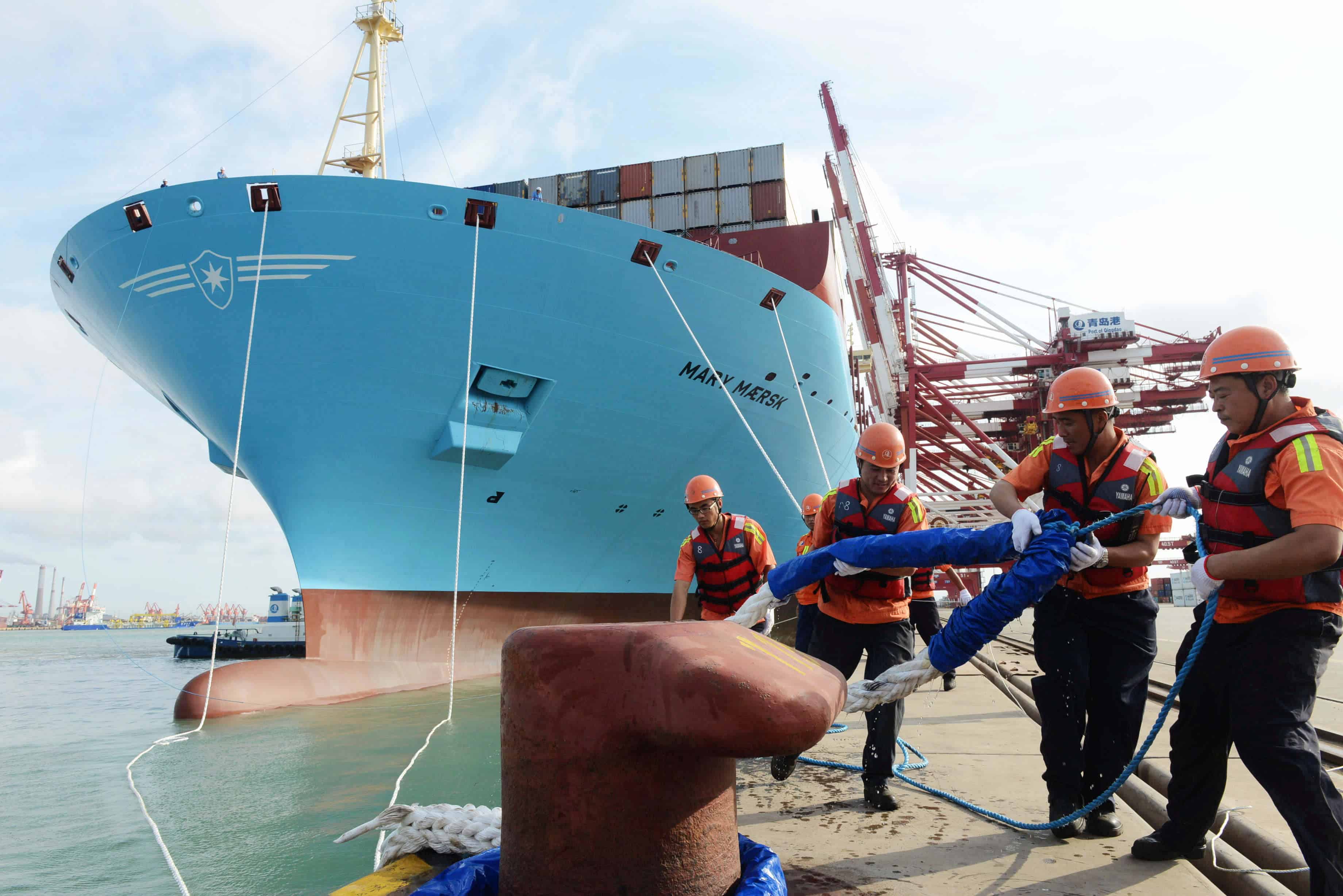
Where High-Risk Industries Sit in Relation to This Standard
For organisations in the maritime, mining, and oil and gas sectors, ISO 45003 is practical and directly relevant. The psychosocial hazard categories map closely to conditions that workers in these industries encounter as a matter of routine.
Sector | Hazard Type | How it Appears |
|---|---|---|
Mining | Remote and isolated work | FIFO arrangements that separate workers from support networks across extended rotations |
Maritime | Shift work and long hours | Watch-keeping rotations and 12-hour shifts across voyages with no opportunity for recovery |
Oil & Gas | Sustained concentration demands | Safety-critical decision-making maintained across full offshore rotations, without adequate rest breaks |
Maritime | Work overload | Compounding operational pressure across voyages, with limited relief and no structured recovery windows |
All three | Leadership gaps | Cultures shaped by physical separation and hierarchy, where raising concerns carries professional cost |
Mining / Oil & Gas | Isolation | Limited access to family, social connections, and support networks during extended site stays |
Oil & Gas | Circadian disruption | Offshore rotation cycles that generate ongoing sleep debt, undetected by standard pre-shift checks |
Maritime / Mining | Accumulated fatigue | Sleep debt compounding across a rotation before port, without visible performance signals |
The standard also recognises that psychosocial hazards interact with each other and with physical hazards. Fatigue increases the risk of injury through human error. Sustained pressure reduces the quality of decisions made under conditions that already carry high consequences. Isolation compounds the psychological load across a rotation, reducing the cognitive and emotional resources available when they are most needed.
These interactions are part of what makes psychosocial risk a system design problem, not an individual resilience problem.
Addressing fatigue in isolation, without addressing the roster structure and team culture that produce it, leaves the underlying conditions intact.

The Control Hierarchy
ISO 45003 applies the same hierarchy of controls used for physical hazards. The principle is identical: get as close to the source of risk as possible, and treat downstream interventions as supplementary rather than sufficient.
Level | Principle | Example |
|---|---|---|
Primary | Address the source: redesign rosters, workload distribution, recovery structures | Restructuring FIFO rotations to build in adequate recovery between site stays. Redesigning watch-keeping schedules to reduce cumulative sleep debt. |
Secondary | Build capability: train leaders and workers to recognise and manage risk | Fatigue recognition training for offshore supervisors. Leadership programs that build an early-reporting culture on remote sites. |
Tertiary | Reduce harm: rehabilitation, EAPs (Employee Assistance Programs), corrective support | Return-to-work support following stress-related absence. Confidential counselling accessible to seafarers and remote workers without connectivity barriers. |
This hierarchy is not a case for abandoning existing investments in awareness training or individual support programmes. Those interventions sit at the secondary and tertiary levels for good reason. They build capability and provide important support to workers who need it.
What the hierarchy clarifies is where those interventions fit within a complete system. Secondary and tertiary controls work best when primary controls are also in place. Without a structured understanding of the conditions driving risk, individual-level programmes address symptoms rather than sources.
The standard expects both to be present. And it expects organisations to be able to show the evidence.
For a board or a regulator, that question is increasingly practical: can your organisation demonstrate that it has identified the psychosocial hazards present in its operations, assessed the adequacy of existing controls, and has a plan to address identified gaps?
Individual-level provisions alone cannot answer it. They were never designed to operate at that level.

What Measurement Makes Possible
Structured measurement is what makes ISO 45003 actionable in practice. It provides a basis for hazard identification, makes risk assessment specific rather than assumed, and produces the gap analysis needed to prioritise where controls will have the greatest impact.
Organisations that establish a baseline understanding of where psychosocial risk is concentrated gain three things: the ability to prioritise interventions based on evidence rather than assumption; a basis for tracking whether controls are working over time; and documented evidence in the form of risk registers, gap analyses, and performance data that hold up under audit, regulatory scrutiny, and board review.
This is where psychosocial risk management becomes operational intelligence rather than a compliance exercise.
ISO 45003 provides the framework. The question for operations leaders is what it would take to apply that framework to their own workforce: where the risks are concentrated, how those risks compare to existing controls, and what the gap between the two is costing.
The Six Drivers Self-Assessment gives leaders a structured, evidence-based starting point for identifying where psychosocial risk is present in their operations and mapping it against the conditions ISO 45003 expects to be managed.: take our free Six Drivers of wellbeing mini self-assessment